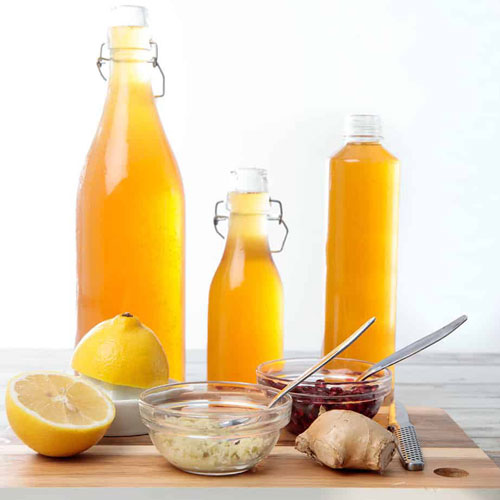
What is Kombucha Made Of? Understanding the Ingredients

what-is-kombucha-made-of

What is kombucha made of?

Kombucha, the increasingly popular fermented tea beverage, has gained a reputation for its unique taste and potential health benefits. But what is kombucha made of exactly? In this article, we will explore the key ingredients that make up this intriguing elixir and the fermentation process that transforms them into a flavorful and probiotic-rich drink.

Tea:

First, the base ingredient of kombucha is tea, typically black or green tea. Tea leaves provide essential compounds such as polyphenols, which act as antioxidants and contribute to the flavor and color of the final product. The type of tea used can influence the taste profile of the kombucha.

Sugar:

Secondly, the fermentation process relies on sugar as fuel. The kombucha culture, known as the SCOBY (Symbiotic Culture of Bacteria and Yeast), uses the energy provided by sugar to convert the tea into kombucha. Yeast and bacteria consume the sugar during fermentation, producing organic acids, carbon dioxide, and trace amounts of alcohol.

Water:

Thirdly, water is a vital component of kombucha, making up the majority of the beverage. It serves as the liquid base for brewing the tea and dissolving the sugar. The quality of water used can impact the overall taste and quality of the final product.

SCOBY:

Fourthly, the living organism responsible for fermenting the tea and transforming it into kombucha is the SCOBY. The SCOBY is a gelatinous, rubbery disc that floats on the surface of the brewing liquid. It consists of various strains of bacteria (such as Acetobacter, Gluconobacter, and Lactobacillus) and yeast (such as Saccharomyces, Brettanomyces, and Candida) that work together symbiotically during fermentation.

Starter Liquid:

Fifth, the starter liquid is a small quantity of previously fermented kombucha that is used to kickstart the fermentation process. It contains the necessary microorganisms from previous batches to inoculate the new tea with beneficial bacteria and yeast.

During the fermentation process, the SCOBY consumes the sugar in the tea, producing organic acids (such as acetic acid, lactic acid, and gluconic acid), carbon dioxide, and trace amounts of alcohol. This combination of acids gives kombucha its tangy flavor and characteristic effervescence.

It is equally important to note that while tea, sugar, water, SCOBY, and starter liquid form the basic ingredients of kombucha, individuals can add additional flavorings and perform secondary fermentation to enhance the taste and create a variety of flavors. Common flavorings include fruits, herbs, spices, and even additional teas.


    Furthermore, individuals can enjoy kombucha in various flavors and variations, allowing them to create a wide range of creative and customized combinations.

    In addition, like with any fermented food or drink, it’s crucial to practice proper brewing techniques, maintain cleanliness and hygiene, and ensure the quality of ingredients to produce a safe and delicious batch of kombucha.

    In conclusion, kombucha enthusiasts make this tangy, effervescent drink from tea, sugar, water, SCOBY, and starter liquid. During fermentation, the SCOBY consumes the sugar and transforms the tea into a drink rich in probiotics and organic acids. By adding different flavorings, individuals can tailor kombucha to their preferences and taste profiles. So, grab a bottle of this refreshing beverage and savor its unique blend of flavors and potential health benefits.

    Exploring the Flavors: Unique Kombucha Recipes to Try

    Unique-Kombucha-Recipes

    Kombucha, the effervescent and tangy fermented tea, is not only known for its potential health benefits but also for its versatility in flavor. While traditional kombucha is delicious on its own, it can be an exciting culinary adventure to experiment with different ingredients and create unique flavor profiles. In this article, we will explore a variety of innovative kombucha recipes that will tantalize your taste buds and elevate your kombucha experience.

    Citrus Burst

    Give your kombucha a refreshing twist by adding a burst of citrus flavors. Squeeze the juice of your favorite citrus fruits, such as oranges, lemons, or grapefruits, and add it to your fermented kombucha. Adjust the amount of juice to achieve your desired level of tanginess. Garnish with a slice of citrus fruit for an extra visual appeal.

    Berry Blast

    Infuse your kombucha with the vibrant flavors of berries. Add a handful of fresh or frozen berries, such as strawberries, raspberries, or blueberries, to your second fermentation. As the kombucha ferments further, the berries will release their natural sweetness, creating a delightful fruity concoction. Sieve out the berries before bottling if desired, or leave them in for added texture.

    Herbal Infusion

    Explore the world of herbs by infusing your kombucha with aromatic and therapeutic plants. Mint, basil, lavender, or rosemary can all lend unique flavors to your brew. Simply add a few sprigs of your chosen herb during the second fermentation and let the flavors infuse. Strain out the herbs before bottling or leave them in for a more intense herbal experience.

    Tropical Paradise

    Transport yourself to a tropical oasis with a kombucha blend inspired by the flavors of the tropics. Mix in some freshly squeezed pineapple or mango juice to your fermented kombucha for a taste of paradise. Garnish with a slice of pineapple or a few chunks of mango to enhance the tropical vibe.

    Spiced Delight

    Add warmth and complexity to your kombucha with a blend of spices. Cinnamon sticks, cloves, ginger, or cardamom pods can all infuse your brew with enticing flavors. Toss the spices into your second fermentation and let them mingle with the kombucha. Remove the spices before bottling or leave them in for a bolder spiced experience.

    Floral Elegance

    Introduce floral notes to your kombucha for a delicate and sophisticated flavor profile. Rose petals, hibiscus flowers, or lavender buds can create a fragrant and visually appealing brew. Steep the flowers or petals in a small amount of hot water, let it cool, and add it to your fermented kombucha during the second fermentation. Strain out the flowers before bottling or leave them in for an elegant touch.

    Creamy Dream

    For a creamy and indulgent kombucha experience, consider blending it with coconut milk or almond milk. Mix equal parts of fermented kombucha and your preferred plant-based milk for a luscious and creamy texture. Experiment with different ratios until you achieve the desired balance of flavors.

    Embarking on a kombucha flavor exploration is a delightful way to unlock the full potential of this versatile beverage. The unique recipes mentioned above are just the beginning, as you can combine various fruits, herbs, spices, and more to create your own signature blends. Allow your creativity to flow and enjoy the journey of discovering new flavors and taste sensations. Cheers to a world of kombucha possibilities!